Brig. Gen. Terence G. Taylor, an Air Force command pilot and former special operations wing commander, was publicly identified as Joint Special Operations Command’s deputy commanding general at a February 2026 professional symposium. 2 3
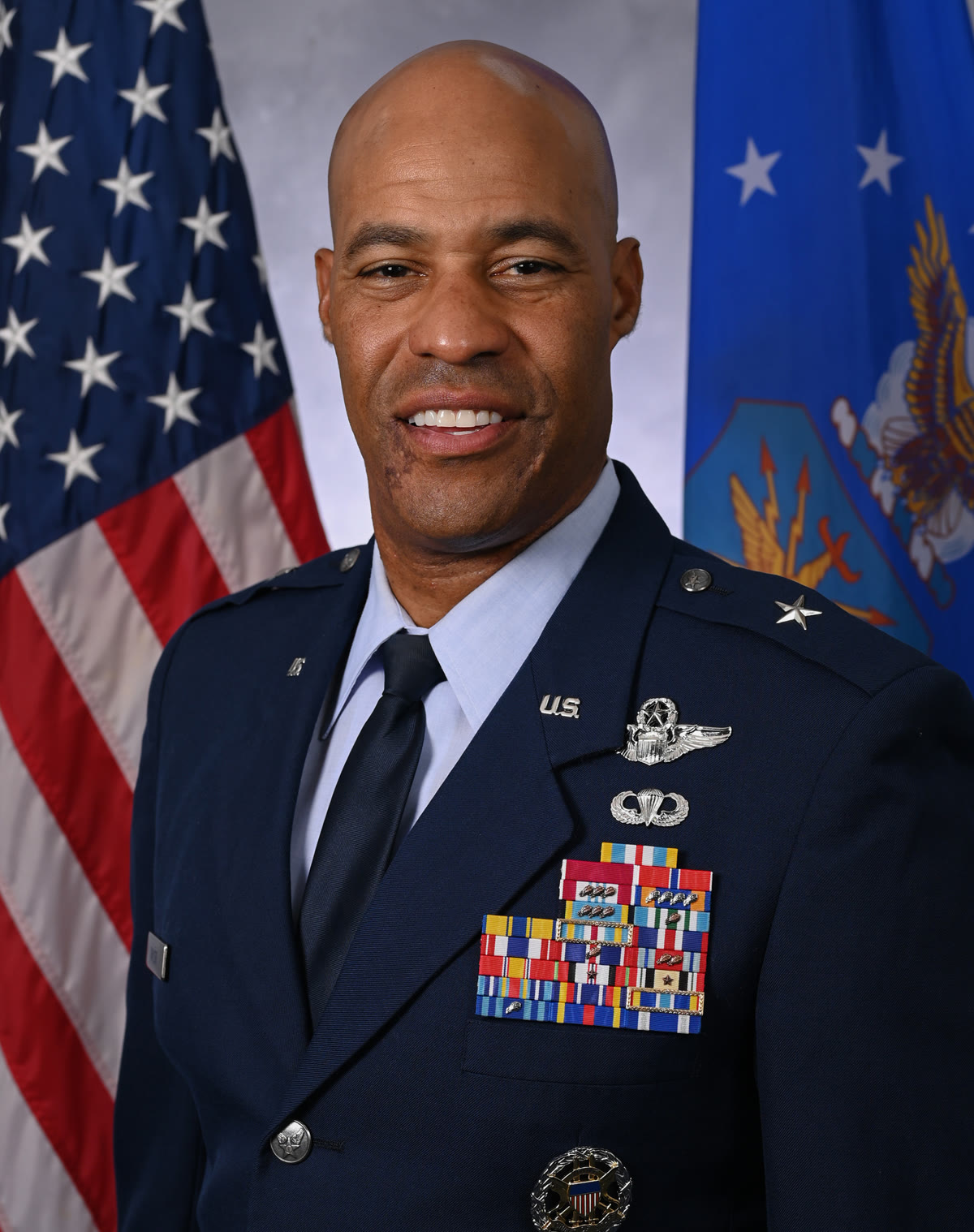
Official U.S. Air Force portrait of Brig. Gen. Terence G. Taylor. 1

By PAI
Sept. 2, 2026
FORT BRAGG, N.C. — Public records identify Brig. Gen. Terence G. Taylor as the deputy commanding general of Joint Special Operations Command, or JSOC. His Air Force biography says he oversees the study of special operations requirements to address time-sensitive and complex national problems. 2 3
That official biography is labeled current as of March 2025. A later, independent public confirmation came at the Global SOF Foundation’s Special Air Warfare Symposium in February 2026, where the organization listed Taylor as “Deputy Commanding General, JSOC” on an interagency-collaboration panel. The public record therefore supports the title through February 2026; it does not publicly describe his day-to-day portfolio or particular operations. 2 3
A joint special operations role
JSOC is a subordinate unified command of U.S. Special Operations Command. Its published mission is to prepare assigned, attached and augmentation forces and, when directed, conduct special operations against threats to protect the homeland and U.S. interests abroad. 4
Taylor’s Air Force biography frames his deputy role more narrowly, as oversight of the study of special operations requirements. The two descriptions provide institutional context and a published role statement, rather than a public account of particular JSOC missions, authorities, plans or outcomes involving Taylor. 2 4
His appearance with former acting Drug Enforcement Administration Administrator Derek S. Maltz on the Global SOF Foundation panel is public evidence of an interagency-facing professional event, not evidence of responsibility for a specific law-enforcement case or operation. The event account did not identify operational matters or assignments for Taylor beyond his title. 3
Commission, education and flying record
Taylor earned a Bachelor of Science in computer science from the University of Virginia and received his Air Force commission through the university’s Air Force Reserve Officer Training Corps program in 1997. His official education record also lists Squadron Officer School in 2003; a Master of Arts in national security and strategic studies from American Military University in 2004; Air Command and Staff College by correspondence in 2006; Air War College by correspondence in 2014; and a Master of Arts in strategic studies from Air War College in 2017. 2
His assignment record begins with the Casual Lieutenant Program at the University of Virginia in 1997, followed by undergraduate pilot training at Vance Air Force Base, Oklahoma, in 1998, advanced flight training at Naval Air Station Corpus Christi, Texas, and C-130 and MC-130H qualification training. He then served as an MC-130H aircraft commander with the 15th Special Operations Squadron at Hurlburt Field, Florida, from May 2000 to May 2003. 2
The Air Force lists Taylor as a command pilot with more than 4,800 total flight hours, including more than 1,800 combat hours, and 13 deployments in support of overseas contingency operations. A March 2024 Air Forces Central promotion record specified 1,803 combat hours and 4,800 total hours in nine aircraft. 2 6
His published aircraft qualifications are the T-37, T-44, C-130E, MC-130H, C-208, CN-235, BE-200, C-130H and MQ-9. The available records establish qualification and cumulative flying totals; they do not publicly apportion hours, deployments or combat activity by aircraft, country, unit or mission. 2
From 2003 to 2010, the biography places Taylor in an evaluator-pilot assignment with an Air Force Special Operations Command geographically separated unit, or GSU, and then as a flight commander with an AFSOC ground support unit. The Air Force’s public wording does not identify the locations, organizations or duties beyond those generic descriptions, and the record offers no basis to add them. 2
Policy and interagency assignments
Taylor’s record then moves from flying units into policy and joint assignments. It lists an Air Force fellowship with the Project on National Security Reform in Washington from June 2010 to June 2011, followed by an operations-officer assignment in the State Department’s Bureau of Counterterrorism from June 2011 to November 2012. 2
A 2023 Cannon Air Force Base fact sheet said Taylor’s Bureau of Counterterrorism work included directing and coordinating political and operational responses to international terrorism and implementing U.S. counterterrorism policies through coordination with government departments and agencies. That was an institutional description of the assignment, not a public accounting of his individual policy decisions. 10
The State Department currently describes the bureau’s mission as developing coordinated strategies and approaches to defeat terrorism abroad and securing international partners’ counterterrorism cooperation. That published mission explains the civilian-policy setting of the assignment but does not independently document Taylor’s work on any particular issue. 12
The biography records a return to an AFSOC GSU as operations officer from December 2012 to June 2014, followed by command of an AFSOC GSU from June 2014 to June 2016. It calls the command a “selectively manned flying squadron” elsewhere in the overview. As with the earlier GSU assignments, the Air Force has not publicly identified its location or operational detail, so this profile retains the service’s generic terminology. 2
After attending Air War College in 2016-17, Taylor served on U.S. Special Operations Command’s Special Operations Support Team at the FBI in Washington from May 2017 to May 2018. The 2023 Cannon fact sheet said he was a USSOCOM liaison officer at the FBI who worked policy and response options in the Counter Weapons of Mass Destruction Directorate; that statement identifies an organizational context, not a disclosed case record. 2 10
From May 2018 to May 2019, he was the Sensitive Activities Division chief for the deputy director for special operations and counterterrorism, J-37, on the Joint Staff at the Pentagon. The Air Force biography identifies this as his listed joint assignment, but does not publicly define Taylor’s responsibilities, the activities at issue or operational results. 2
Group and wing command
Taylor commanded the 1st Special Operations Group at Hurlburt Field from May 2019 to May 2021. At the time he assumed command, an Air Force photo caption described the group as planning and executing worldwide special operations and security assistance, using more than 55 fixed-wing and tilt-rotor aircraft to provide day-or-night, all-weather access to hostile or denied airspace. That is the group’s published mission description, not a measure of Taylor’s personal operational record. 2 9
He next commanded the 27th Special Operations Wing at Cannon Air Force Base, New Mexico, from June 2021 to May 2023. A 2023 Cannon fact sheet described the wing as planning, posturing and executing precision strike, specialized mobility, and intelligence, surveillance and reconnaissance missions with special operations forces; it listed four groups, 25 squadrons, and AC-130J, MC-130J, CV-22B, U-28A and MQ-9 aircraft. 2 10
AFSOC’s current fact sheet similarly says the 27th Wing directs the deployment, employment, training and planning of squadrons supporting flying operations, with core missions that include close air support, agile combat support, multi-domain operations, precision strike, forward presence and engagement, intelligence, surveillance and reconnaissance, and specialized mobility. That is the institutional scope of the command Taylor held, not a finding that he personally conducted each mission. 11
A KAMR/KCIT interview in February 2023 reported that Taylor was the first Black wing commander in the 33-year history of AFSOC. The report is the public basis for that reported milestone; this profile does not treat it as an independently verified service-wide historical finding. 13
In the same interview, Taylor described his leadership view as service to Airmen and families, saying, “I need to be able to provide for all of these airmen and their families. So that’s, that’s job number one for me.” He also said the visibility of a Black commander could matter to younger Airmen who saw someone relatable in that position. Those are Taylor’s own views, as reported by KAMR/KCIT, rather than objective measures of leadership performance. 13
Al Dhafra command and general officer promotion
Taylor took command of the 380th Air Expeditionary Wing at Al Dhafra Air Base, United Arab Emirates, on June 5, 2023, after leaving Cannon. The Air Forces Central account identified his predecessor as Brig. Gen. David R. Lopez and quoted Taylor saying the wing was ready today and understood the importance of being relevant tomorrow. 7
At a March 5, 2024, promotion ceremony in the U.S. Central Command area of responsibility, Air Forces Central said Taylor was responsible for the wing’s armed overwatch mission, including intelligence, surveillance and reconnaissance, command-and-control reporting-center assets, theater security cooperation, and Agile Combat Employment and Dynamic Force Employment missions supporting Air Forces Central and CENTCOM priorities. This is a public description of the wing command, not a disclosure of specific operational activity. 14
A CENTCOM caption records that Col. Ronald Selvidge assumed command from Taylor on April 1, 2024. Taylor’s official biography lists the 380th assignment as June 2023 through April 2024 and his JSOC position beginning in May 2024, which is consistent with those change-of-command dates. 2 8
The promotion timeline has a public-record discrepancy. A Defense Department announcement in January 2023 named then-Col. Taylor for appointment to brigadier general while he was commanding the 27th Wing; a DVIDS caption says he received the oath as Brig. Gen. Taylor on March 5, 2024; but the Air Force biography’s effective-dates table lists brigadier general as Sept. 3, 2024. The available public sources do not explain the different dates, so this profile reports rather than reconciles them. 5 6 2
Decorations and the record’s limits
Taylor’s Air Force biography lists the Defense Superior Service Medal; Legion of Merit with oak leaf cluster; Bronze Star Medal; Defense Meritorious Service Medal with three oak leaf clusters; Air Medal with 20 oak leaf clusters; Aerial Achievement Medal with three oak leaf clusters; Joint Service Commendation Medal with oak leaf cluster; and Air and Space Commendation Medal among his major awards and decorations. The public biography does not provide the underlying citations, dates or actions for each award. 2
The record consequently supports a documented career across special operations aviation, policy, interagency liaison work, group and wing command, and a current JSOC leadership post publicly confirmed in February 2026. It does not support conclusions about classified duties, mission outcomes, individual relationships, political views or achievements not stated in the cited sources. 2 3